Understanding Legionella: A Laboratory Perspective
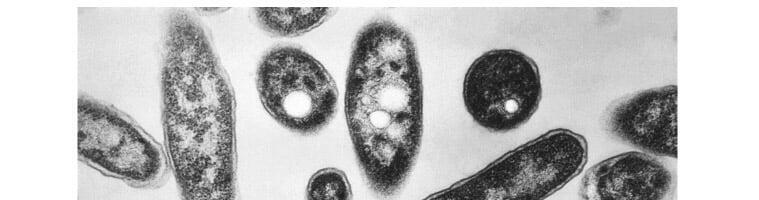
What is Legionella?
Legionella is a genus of bacteria naturally found in freshwater environments such as lakes, rivers, and streams. More than 37 species have been identified, but Legionella pneumophila—especially serogroups 1, 4, and 6—is most often linked to human disease outbreaks, including Legionnaires’ disease and Pontiac fever.
When introduced into building water systems under the right conditions, Legionella can multiply rapidly, posing a significant health risk if aerosolized water droplets are inhaled.
Where Does Legionella Come From?
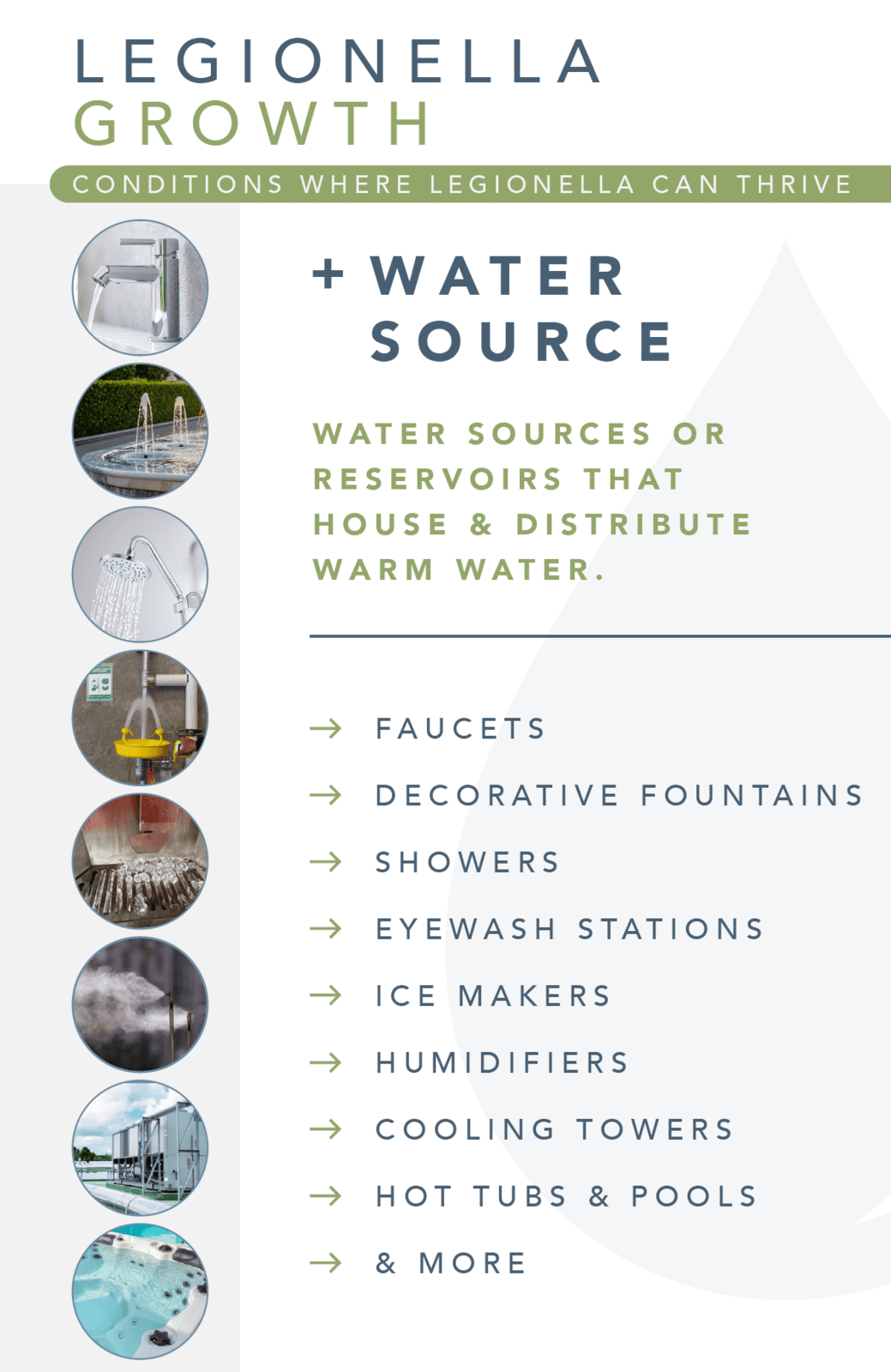
Legionella bacteria are common in natural water sources but become a concern when they enter and colonize building systems such as:
➜ Cooling towers and evaporative condensers
➜ Domestic hot and cold water systems
➜ Decorative fountains, spas, and water features
➜ Ice machines, humidifiers, and misting systems
These environments often provide nutrients, biofilm, and temperature conditions ideal for bacterial growth. Legionella thrives most readily between 77 °F and 108 °F (25 °C – 42 °C) and can persist at lower or higher temperatures if stagnation or biofilm is present. Without consistent monitoring and control, the bacteria can form resilient colonies within plumbing or mechanical systems.
How Does Exposure Occur?
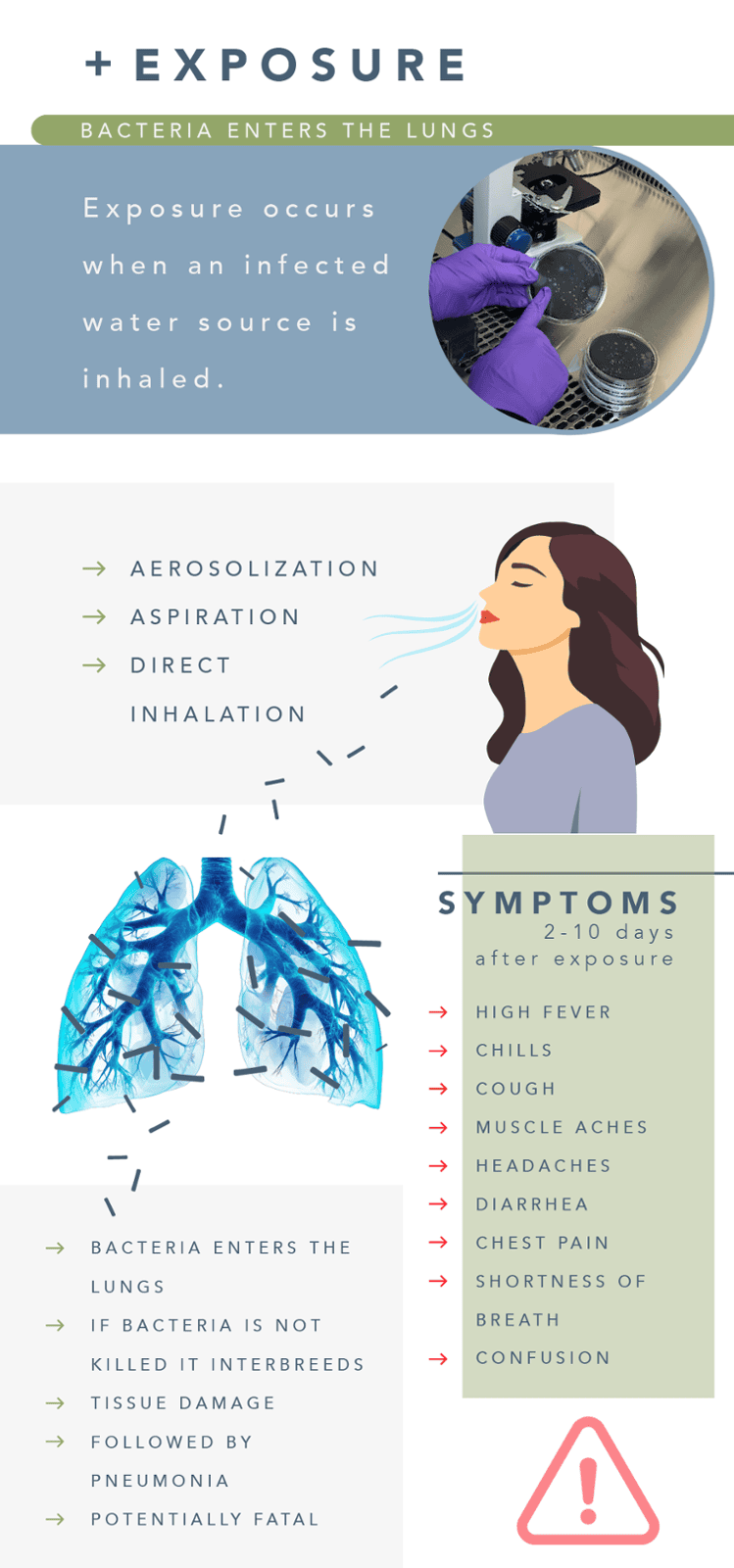
People become infected by inhaling aerosolized water droplets containing Legionella bacteria. The disease is not spread from person to person. Common exposure sources include:
➜ Cooling towers releasing mist into the air
➜ Showers, faucets, and hot water outlets fed by colonized systems
➜ Whirlpool spas and decorative fountains
➜ Humidifiers, misters, or produce sprayers using untreated water
Although many exposed individuals never become ill, those with weakened immune systems, chronic lung disease, or advanced age face a higher risk of contracting Legionnaires’ disease.
Legionella Exposure: Early Symptoms and At-Risk Populations
Not everyone exposed to Legionella becomes ill, but high-risk populations—older adults, immunocompromised individuals, smokers, and those with chronic lung disease—can develop severe pneumonia quickly. These groups are common in hospitals, nursing homes, and large residential facilities, making consistent control and verification essential for water treaters serving these markets.
Symptoms typically appear 2–10 days after exposure and include high fever, chills, cough, shortness of breath, headaches, muscle aches, and sometimes diarrhea. Because these symptoms mimic other respiratory illnesses, outbreaks can go unnoticed without reliable testing tied to a facility’s water management program.
For buildings with vulnerable occupants, routine Legionella monitoring reduces liability, supports compliance, and gives water treaters defensible data when responding to customer concerns. Regular testing validates that control measures are working—and provides early detection before a system becomes a clinical or regulatory problem.
Testing For Legionella: Modern Laboratory Methods
BLS Testing Methods
Culture Method (Gold Standard):
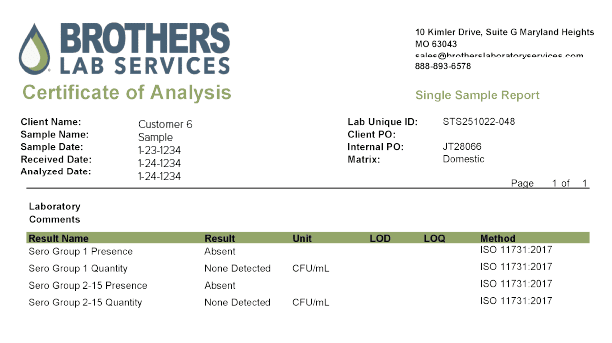
Detects live Legionella organisms through a 7-10-day incubation period on selective media. Required for regulatory and compliance verification and used to determine viability.
qPCR (Quantitative Polymerase Chain Reaction):
A rapid molecular method that identifies Legionella DNA and delivers results within 45 minutes. Ideal for post-remediation verification and routine monitoring.
Legionella Species Screening:
Immunological and rapid presence/absence tests used in specific screening applications or initial risk assessments.
CDC ELITE Certified
Brothers Laboratory Services (BLS) provides accredited, precise testing to detect and quantify Legionella in environmental water samples.
As a CDC ELITE-certified laboratory, BLS follows stringent quality standards in both traditional and advanced molecular detection methods.
Your Testing Process—Made Simple.
BLS provides sampling guidance, chain-of-custody documentation, and proper shipping materials to ensure sample integrity from collection to analysis. Sampling locations typically include cooling tower basins, hot water return loops, storage tanks, and distal outlets identified as high-risk points.
Water Management Programs (WMPs)
An effective Water Management Program (WMP) is the foundation of Legionella control and prevention. A WMP is a site-specific plan that identifies hazards, establishes control limits, and defines monitoring and corrective-action protocols.
Current standards and guidance include:
➜ ASHRAE Standard 188: Establishes the minimum requirements for risk management of building water systems.
➜ CDC Toolkit for Controlling Legionella: Provides practical steps for implementation and monitoring.
➜ CMS Memorandum (QSO-17-30): Requires healthcare and long-term care facilities to maintain water management programs to protect patients and residents.
➜ ASSE 12080 Certification: Recognizes professionals trained as Legionella Water Safety and Management Specialists, ensuring that those developing and overseeing water safety programs are competent and qualified.
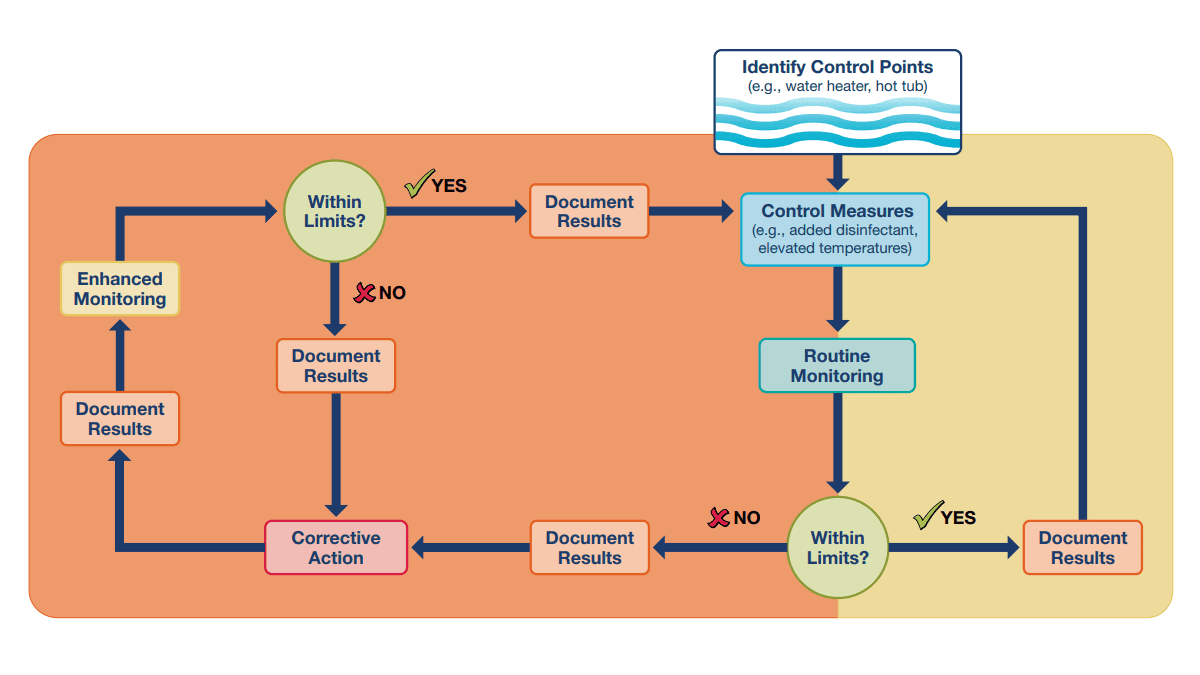
BLS supports facility teams and ASSE 12080-certified professionals by providing accurate, traceable laboratory data that verify program effectiveness and protect occupants.
The BLS Difference
Brothers Laboratory Services provides fast turnaround, accurate data, and complete confidentiality. With our analytical support, facilities gain the insight needed to optimize treatment programs, extend equipment life, and reduce operating expenses.
CDC ELITE-Certified for Legionella culture and molecular analysis
Fast turnaround times, including rapid qPCR testing within 45 minutes
Stringent quality control aligned with ISO 11731
Support for ASSE 12080-certified professionals and building WMP teams
Trusted nationwide by water treatment, environmental, and healthcare partners
Brothers Laboratory Services was built by water treaters, for water treaters. Our mission is to deliver dependable laboratory data that empower informed decisions, ensure compliance, and uphold the highest standards of water safety.